Does Baby Lose His Hearing at the End of Baby Driver
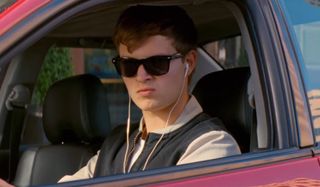
SPOILER Alert: The following commodity contains admittedly massive spoilers for the end of Edgar Wright'south Infant Commuter. If you have not notwithstanding seen the flick, and don't wish to know any details nearly the flick, delight bookmark this link and return to this feature afterwards your screening!
It's been a nice long four year wait, just finally author/managing director Edgar Wright has a new flick in theaters -- and it'southward a stunner. Babe Driver is an incredible slice of daring and heed-blowing art that uses music unlike anything you've seen before -- and it's without question one of the all-time movies of 2017. Equally such, information technology offers up plenty of dissimilar discussions topic, regarding its bombastic action sequences and groovy soundtrack, but the most obvious subject to investigate is its mysterious catastrophe.
In this feature, we'll not only analyze what goes downwardly at the end of Infant Driver, simply also swoop into the perspectives of stars Ansel Elgort and Lily James, every bit well equally writer/director Edgar Wright. And so what is it that's going on in the last scene of the phenomenal crime thriller? Allow'due south dig in!
What Happens At The End Of The Film
Babe Driver steers into its final turn shortly after the final showdown with Buddy (Jon Hamm), as Baby (Ansel Elgort) and Debora (Lily James) bulldoze towards what they hope is finally a route to freedom. Baby, in the passenger seat, is dazed and still slowly adjusting to the fact that he is at present generally deafened thanks to Buddy's gun. Over the stereo we hear the sound of Sky Ferreira's embrace of The Commodores' "Piece of cake," and Debora asks if it's really Baby's mom who is singing -- revealing that she has put his cassette in the tape deck. "She has a cute voice," Debora says, and Baby replies, "I know," absorbing the sound by putting his hand on the door speaker.
Sadly, the dream of driving off into the sunset is short-lived, as while crossing a bridge they meet a cadre of constabulary cars and officers who have been waiting for their arrival. Debora's instinct kicks in to throw the car into reverse, but Baby hits the brakes and pulls the key from the ignition. He recognizes that he tin can't pull her into his world by making her his accomplice, kisses her, and exits the machine to give himself upwardly.
A montage then follows Babe as he makes his fashion through the judicial system -- every bit we not only run across him get his mugshot taken and be processed, but also hear the testimony of key witnesses -- including the woman whose auto he stole, the post part clerk, and his foster begetter, Joe (with the sign language translator voiced past legendary managing director Walter Colina). A guess sentences Baby to 25 years of incarceration, with the possibility of parole in five. He spends his time in prison mopping floors, watching Television receiver, and reading a postcard from Debora telling him that she can't wait until they reunite.
As we saw earlier in the moving-picture show, there is and so what appears to exist a black and white fantasy sequence as Baby is exiting the prison, but the scene fades to color every bit Babe and Debora are reunited in a reddish and white convertible -- and after the revelation of Baby'southward real name (Miles) and a drive off toward the horizon with a rainbow in the heaven, you're left to wonder if what y'all're seeing is actual reality. To help clear things upward, we asked Ansel Elgort, Lily James, and Edgar Wright all individually near the finale... and they all surprisingly had very dissimilar things to say about Babe Driver's ending.
What Ansel Elgort Thinks Happens
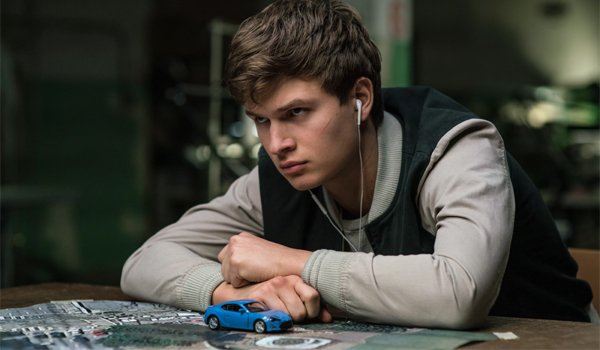
If yous're thinking that the stop of Baby Driver showcases the ultimate fate of Baby and Debora, so you're thoughts become strictly against those of Ansel Elgort. It turns out that he is firmly in the "it'due south not actually real" camp. At the Los Angeles press day for the movie in mid-June, I asked the player about the ending during a one-on-one interview, and he left no ambivalence regarding his thoughts on the way the movie finishes. Said Elgort,
It's a fantasy. It's definitely a fantasy... I recall he makes it pretty clear -- 'Don't expect for me, don't worry about it,' but she's like 'I will await for you, and I can't await to somewhen listen to every 'Babe' song we fantasized about; I don't care if y'all're in prison.' So then he imagines, the blackness and white, eventually when I get out nosotros're going to ride off into the sunset together.
Substantially, Ansel Elgort thinks that there is a futurity for Baby and Debora, but that information technology's not actually what we see play out in the last scenes. Instead, information technology's a fantastical vision of what that eventual reunion may be -- hence the use of the black and white.
For the actor, the cardinal element in all of it is the idea of Debora potentially waiting a full two and a one-half decades for Baby to be given his freedom. Ansel Elgort was non stifled in his thoughts on the thing, and explained during our interview why the postcard is really the fundamental chemical element in the ending:
It'southward that Baby knows that Debora is going to wait for him. With the postcard he got from her... nosotros did ane take that was very emotional that wasn't in the motion-picture show because information technology was too indulgent. I really broke down in the prison, because I idea about how much that would mean to him. He got into all this problem, and he's in prison at present -- he's in there forever, basically. For so long -- 25 years. He doesn't know. I wouldn't expect someone to wait 25 years for me! I wouldn't expect my girlfriend of five years to do that, my current girlfriend. I would be similar, 'Yo, I fucked upwards; live your life! You don't take to await for me for 25 fucking years.' So if she said, 'I really desire to,' I would be extremely touched, and I felt that every bit Babe.
On a more than macro level, Ansel Elgort also told me that he had a heavy appreciation for the cease of Baby Commuter just in that it's a film that features legitimate consequences for its criminal hero's activity. He told me that he sees something inherently phony almost picture show criminals getting away with the job and living happily ever after, and loved that Edgar Wright's moving picture was willing to have his graphic symbol turn himself in. He explained,
I think the moral of the story at the finish is that crime doesn't pay, and Baby gets in problem! And I've always liked that, because at the terminate of every pic like this they bulldoze off and they're going to Mexico and somehow it's a happy ending. Everything went perfectly. Or someone dies. It'due south usually not, 'He'due south in jail.' Of grade you've got to go to jail! Everyone goes to jail who does that. If you're a depository financial institution robber... they guy who we talked to, Joe Loya, who was similar our criminal consultant, he robbed tons of banks. He said, 'I always knew I'd eventually get caught. Y'all either become shot or you're caught.' But the ride is and so amazing. And so information technology'south nice in this moving-picture show to depict it the correct way.
So that's one vote for "It's all a fantasy." Simply what are Lily James' feelings on the conclusion? Read on to find out!
What Lily James Likes Nigh The Ending
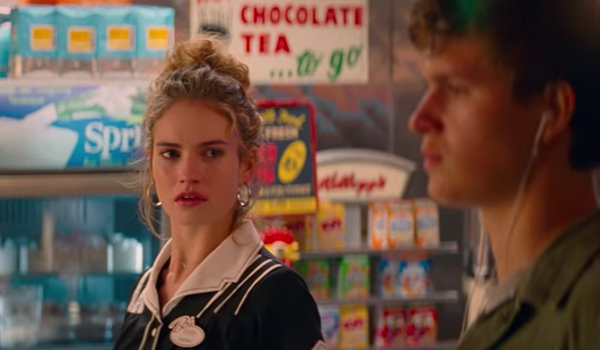
Ansel Elgort may think that the end of Babe Driver is just fantasy and that the idea of the getaway isn't realistic, but Lily James actually expressed dissimilar sentiments when I sabbatum down with her for an interview. In addition to recognizing the particular ambiguity most the reality of the motion-picture show'due south ending, she also expressed that a part of her wishes that they could have avoided the whole prison thing and gone through with their original plans while beingness on the run. Said James,
I think that I wish they could have driven off into the dusk! But I think the catastrophe that Edgar has written is then much more interesting, dramatic, and powerful. I remember that actually seeing him in prison and suit to the loss of his hearing -- finding the rhythm of the prison. And then getting the postcards and non knowing if it's a dream or reality. I retrieve it's got more of an quondam school ending. Information technology's a romantic ending to a gangster story! It really crosses so many genres, but comes together in a manner that feels so smoothen and sexy and cool.
At the terminate of Babe Commuter, what yous ultimately want for the atomic number 82 characters is a happy ending, and whether information technology'due south real or fantasy, that is ultimately what the movie delivers (y'all have to also remember that this is a fictional story about fictional people). Equally Lily James notes, information technology'southward really left up to the audience to decide whether or not Baby and Debora volition reunite afterward he gets out of prison - but regardless of that, the film is still able to play out the "romantic ending to a gangster story."
So at present y'all've heard what the stars of Baby Driver had to say about it, merely what about the homo whose mind is responsible for the entire world in which the picture show exists? Continue to the next page for Edgar Wright's thoughts on the matter!
What Edgar Wright Is Really Doing With Baby Driver'south Ending
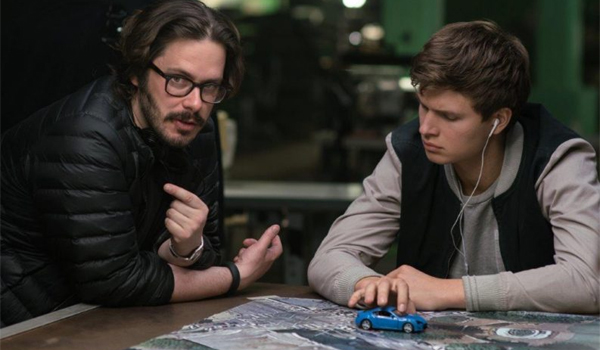
In the making of a movie, the managing director is rex, and the general idea is that what audiences see on the big screen is the consummate vision of the filmmaker. Considering of this, when a narrative ends with ambiguity, information technology is generally the director's opinion that is held in highest esteem. So how does Edgar Wright feel that audiences should exist interpreting the reality or fantasy of the ending? The answer is that it doesn't actually matter, and all that's of import is that at that place are no correct or wrong interpretations, and that in that location is a conversation going on. Wright told me,
I recollect the end scene is upwards for interpretation. And I sort of learned quickly through the test screening process that I should allow people interpret it how they want. I think it'due south an important thing with movies where you don't have to state your actual intention because nobody's response to it is wrong. I think that'south a good thing to practice; you don't want to have everyone say, 'No, you're wrong, you read that wrong.' Information technology's better if yous have two dissimilar interpretations.
So whether you think the Baby Driver ending is reality or make believe, what'southward really ultimately the most important thing is that yous're thinking virtually it and engaging with the material (on that note, thanks for reading this feature!)
During the interview, Edgar Wright likewise detailed why he fabricated the decision that he did to have Baby plough himself in -- rather than either get killed Bonnie and Clyde-mode or live on a la True Romance. Apparently a prison sentence was always waiting for the titular hero at the end of the story essentially because it was the required catastrophe for everything that had been set upwards before in the movie. The writer/director explained,
It was e'er the ending that he gave himself up... And then my idea was this. I felt what we never see in these movies is the idea that information technology'southward him doing something responsible and selfless, because I remember he realizes... it'south paying off what Joe has said to him, 'You don't belong in this globe.' It starts to hit him, similar what [Kevin] Spacey says in the lift: 'It's a skilful thing you like driving, because you're going to take your human foot on the gas for the next 25 years.' When he's sitting in that location and they're surrounded past the police, he starts to realize, 'Why should she be part of this? Why should Debora exist a fugitive when she was only dragged into this like six hours agone.' In that location's the moment where he says, 'I have to leave,' and she says, 'I'm coming with you,' and that'southward her decision. But still I think Baby realizes this is on me, this is not on yous. So he gives himself up, and you don't run across it in the film, merely I'g certain function of his thing is she didn't know annihilation near it, non to implicate her in anything else. He would take the wrap for her, which is sort of a hugely romantic gesture -- 'I'one thousand going to say I hit Buddy.'
Maybe my favorite function of the interview, however, was the little heads upwardly that Edgar Wright gave me about the detail meteorological miracle that we see in the final scene. Considering every detail matters in Wright's movies, there actually is a very specific reason why we see the rainbow, and it's considering of the Dolly Parton vocal that the postal service office worker tells Infant about:
Do you empathize what the rainbow in the terminal scene ways? Remember the teller tells him most the Dolly Parton quote? He says 'Dolly Parton, I similar her.' And she says, 'Everybody wants happiness, nobody wants pain; just there can't be a rainbow without a picayune rain.' He goes through incarceration to get to the rainbow.
How did you translate the end of Baby Driver? Practise you recall that nosotros're seeing Infant actually get released from prison to exist with Debora, or do you lot recall it's just a vision that exists in Baby's mind? Did you get the little rainbow Easter egg that Edgar Wright left? Hit the comments section below with your thoughts!

NJ native who calls LA dwelling house; lives in a Dreamatorium. A decade-plus CinemaBlend veteran; endlessly enthusiastic about the career he'due south dreamt of since 7th grade.
Source: https://www.cinemablend.com/news/1675859/baby-driver-ending-what-the-stars-thinks-really-happened#:~:text=Baby%2C%20in%20the%20passenger%20seat,deaf%20thanks%20to%20Buddy's%20gun.
0 Response to "Does Baby Lose His Hearing at the End of Baby Driver"
Post a Comment